Therapy for Highly Sensitive People

Compassionate therapy for Highly Sensitive People (HSPs) to help you understand, honour and own your sensitivity.

We cannot be more sensitive to pleasure without being more sensitive to pain.

Alan Watts

What do we mean by a Highly Sensitive Person?

Around 15-20% of people have the trait of being highly sensitive. There are as many ways of being highly sensitive as there are highly sensitive people (HSPs) – each is sensitive to different things in different ways in differing amounts. Often though, despite those individual differences, highly sensitive people have lots in common. They tend to feel things much more deeply than others, are alert and aware of danger more often, are often misunderstood as too emotional, too intense or too much and are more easily aroused or upset.

This page is for anyone who feels they may be highly sensitive and would like to learn more about it or get therapy from people that understand first hand the difficulties and challenges of being highly sensitive in a highly insensitive world.

If you, like most people, do not consider yourself highly sensitive, this page is also for you. If you love or are the parent to somebody with this special trait and are looking for support, you are most welcome.


On This Page
  • What is high sensitivity?
  • Elaine Aron’s D.O.E.S framework
  • How sensitivity shows up in life
  • An important distinction
  • Being sensitive in an insensitive world
  • How therapy can help
  • Why work with us
  • Therapies offered
  • FAQ
A Note About Us

We are both Highly Sensitive People ourselves. We do not assume your experience is identical to ours, but we understand something of the depth, nuance, and overwhelm that can come with this trait.

Understanding High Sensitivity

Elaine Aron’s D.O.E.S. framework

Much of this page is informed by the pioneering work of Elaine N. Aron, PhD, whose research and writing helped bring the term Highly Sensitive Person into wider use.

This is only a brief introduction. Our focus here is not to explain every aspect of high sensitivity, but to show how understanding the trait can support deeper therapeutic work.

Dr Aron’s work is often summarised through four core features, known as D.O.E.S.:


D

Depth of processing

You think deeply, reflect carefully, and may need time to make sense of things.

O

Overstimulation

Because you take in a lot, too much noise, pressure, conflict, or demand can become overwhelming.

E

Emotional responsivity and empathy

You may feel deeply and be strongly affected by other people’s moods, pain, beauty, or connection.

S

Sensitivity to subtleties

You may notice shifts in tone, atmosphere, expression, or environment that others miss.

How high sensitivity can show up in life

High sensitivity does not always look dramatic from the outside. Often, it appears in ordinary moments that other people may not realise take effort. You may recognise some of these patterns in yourself, or in someone you love.

After conversations

You replay what was said, how it was said, what you meant, and whether something subtle changed between you.

Decision-making

You may take longer to decide because you are weighing consequences, people’s feelings, possible outcomes, meanings, risks, and details others may not even notice.

Feeling misunderstood

You may know there is more going on inside than people can see from the outside, and feel lonely when others reduce it to “overthinking” or “being too emotional”.

Busy places

Supermarkets, cafés, pubs, trains, bright shops, or busy waiting rooms can leave you feeling drained or overloaded.

In relationships

You may sense distance, disappointment, irritation, sadness, or withdrawal before anything has been said directly.

Beauty, art, music or nature

You may be deeply moved by music, words, landscapes, kindness, beauty, or small moments that others barely notice.

Life getting too full

You may cope well for a while, then suddenly feel saturated by too many demands, messages, decisions, and emotions.

Work and daily demands

You may be thoughtful and conscientious, but struggle with constant interruptions, rushed decisions, noise, or pressure.

Every highly sensitive person is different. You may recognise yourself in many of these examples, only a few, or none at all. This is not a complete list, simply a way of showing how high sensitivity can appear in ordinary life.

An Important Distinction

Being sensitive in an insensitive world.

If high sensitivity is a neutral trait, why do so many highly sensitive people come to feel that something in them is wrong?

Perhaps because the collective has not always known what to do with sensitivity.

We may have made some progress in how we speak about feelings, but sensitivity is still not exactly honoured. We live in a culture that often prizes speed, certainty, productivity, force, performance, and the ability to push through. The person who pauses, feels, notices, questions, grieves, or registers the atmosphere of a room can easily be treated as inconvenient. Sensitivity asks something different of us.

It asks us to listen before we act. To notice what is subtle. To feel the weight of things. To be moved by beauty, troubled by cruelty, and disturbed by what others may have learned to pass over. That can be difficult in a world that rewards bluntness.

For many highly sensitive people, the lesson arrives early. You are too emotional. Too intense. Too quiet. Too affected. Too fragile. Too much. Boys may learn that sensitivity threatens their masculinity. Girls may learn that sensitivity is acceptable only when it is pleasing, gentle, and undemanding. Either way, the sensitive person often learns to mistrust their own nature. They adapt. They become smaller, harder, quieter, more useful, more acceptable. They learn to dampen the signal. They learn to scan the room, manage other people’s reactions, and hide the depth of their own. They learn, little by little, to leave themselves.

But the soul does not disappear simply because it has been ignored.

The very sensitivity that once felt like a burden may also be the path back to something essential. It may be the part of you that still knows how to be moved. The part that can recognise beauty. The part that senses when something is false. The part that refuses to live entirely on the surface. This is not weakness. It is a form of perception. A kind of intelligence. A way of being in conversation with life. Highly sensitive people do not need to become less sensitive in order to belong here. They need to stop apologising for the depth with which they meet the world. They need understanding, boundaries, courage, and the slow recovery of trust in their own nature.

Because sensitivity, rightly held, is not something to overcome. It is something to come home to. And perhaps, in an insensitive world, the task of the sensitive person is not simply to survive it, but to help re-humanise it.
HSPs are encouraged to view their work on their inner lives, their psychological or spiritual insight, their relationships and family life, as significant contributions to their culture.
They must have the courage to think differently, to liberate themselves to a certain extent from their culture's view, to create, rather than consume culture values.

Dr. Elaine Aron

How therapy can help

Many highly sensitive people are drawn to therapy because it offers something they often need and value: space to slow down, reflect deeply, make sense of experience, and be met without being rushed.

Therapy for HSPs is not about becoming less sensitive. It is about understanding your sensitivity, recognising when you are overstimulated, building better boundaries, and separating your innate temperament from shame, old labels, anxiety, trauma, or criticism.

This work can be especially helpful when the therapist understands high sensitivity. Without that understanding, HSPs may be misunderstood as simply anxious, shy, depressed, avoidant, dramatic, or too emotional. Good therapy should not try to toughen you up or make you less sensitive. It should help you become more free.

Working with high sensitivity as a lens can help you make sense of how you got here, what you learned to hide, what you learned to carry, and what kind of life your sensitivity may be asking you to build.

Therapy for Highly Sensitive People

Why highly sensitive people may work with us

We are both highly sensitive people ourselves. We bring lived experience,
professional training, and deep respect for your inner world.

Our approach is grounded, depth-oriented, and compassionate. We support you
without trying to change who you are.

This is a space where your sensitivity can be understood, honoured, and worked
with carefully.

More About Us →

“You do not need to become less sensitive to live more freely.

We understand sensitivity from the inside

We get the depth, intensity, and nuance of being highly sensitive because
we live it too.

We won’t treat sensitivity as a flaw

Your sensitivity is not something to fix. We help you work with it as part
of who you are, not something to overcome.

Space to slow down and process deeply

We create room for reflection, integration, and deeper understanding at a
pace that feels right for you.

Support with overwhelm, boundaries, and self-trust

We help you build the inner steadiness and outer boundaries you need to feel
safer, clearer, and more like yourself.

Is being a Highly Sensitive Person a diagnosis?

How do I know if I am highly sensitive?

Is high sensitivity the same as anxiety?

No, although they can overlap. High sensitivity is about how deeply you process and respond to experience. Anxiety is more about fear, threat, worry, and anticipation of danger.

Therapy can help you begin to separate what belongs to sensitivity, what belongs to anxiety, and what may come from past experiences.

Can therapy make me less sensitive?

Can couples therapy help if one of us is highly sensitive?

Online and In Person Therapy

We offer online therapy from anywhere in the UK and in person therapy in Taunton, Bristol and Exeter. You can choose which feels right for you.

In Person Therapy

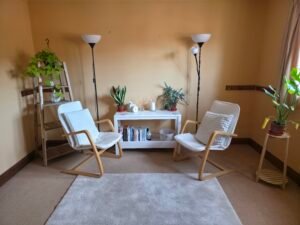
Meet with us in calm, private therapy rooms. Some highly sensitive people prefer being physically in the room, where the presence of another person can feel grounding and supportive. We offer in-person therapy in Taunton, Bristol, and Exeter where rooms and availability allows.

Online Therapy

Connect from the comfort of your own familiar space. Online therapy can reduce the extra stimulation of travel, traffic, waiting rooms, and rushing between places. It also allows you to work with a therapist who may not live near you, but whose approach feels right.

Book a free consultation

Have a straightforward, no commitment 20 minute video call with either David or Jacqui to explore your options. You do not need to become less sensitive to live more freely.

Other Kinds of Therapy

Couples Therapy

Support for your relationship. £80 for 60 minutes.

Online Therapy

Easy to access but no less human and invested. From anywhere in the UK.

Experiences

Coming Soon.